

Valencia, the land of orange groves and the Mediterranean, is one of the best destination wedding locations in Spain. Its relaxed beaches are also a sight to behold, with El Saler stretching untouched for miles. The city’s architecture spans from Gothic El Carmen to more futuristic landmarks such as the City of Arts and Sciences. From hidden courtyards to ancient fincas, Valencia captivates many, making couples feel more connected and truly present. As a wedding photographer based in Valencia, I have witnessed how its warm and forgiving light produces some of the most spectacular photographs. If you are considering Valencia for your wedding, take a moment to explore this guide because it contains details you will be grateful to know for your destination wedding in Valencia.
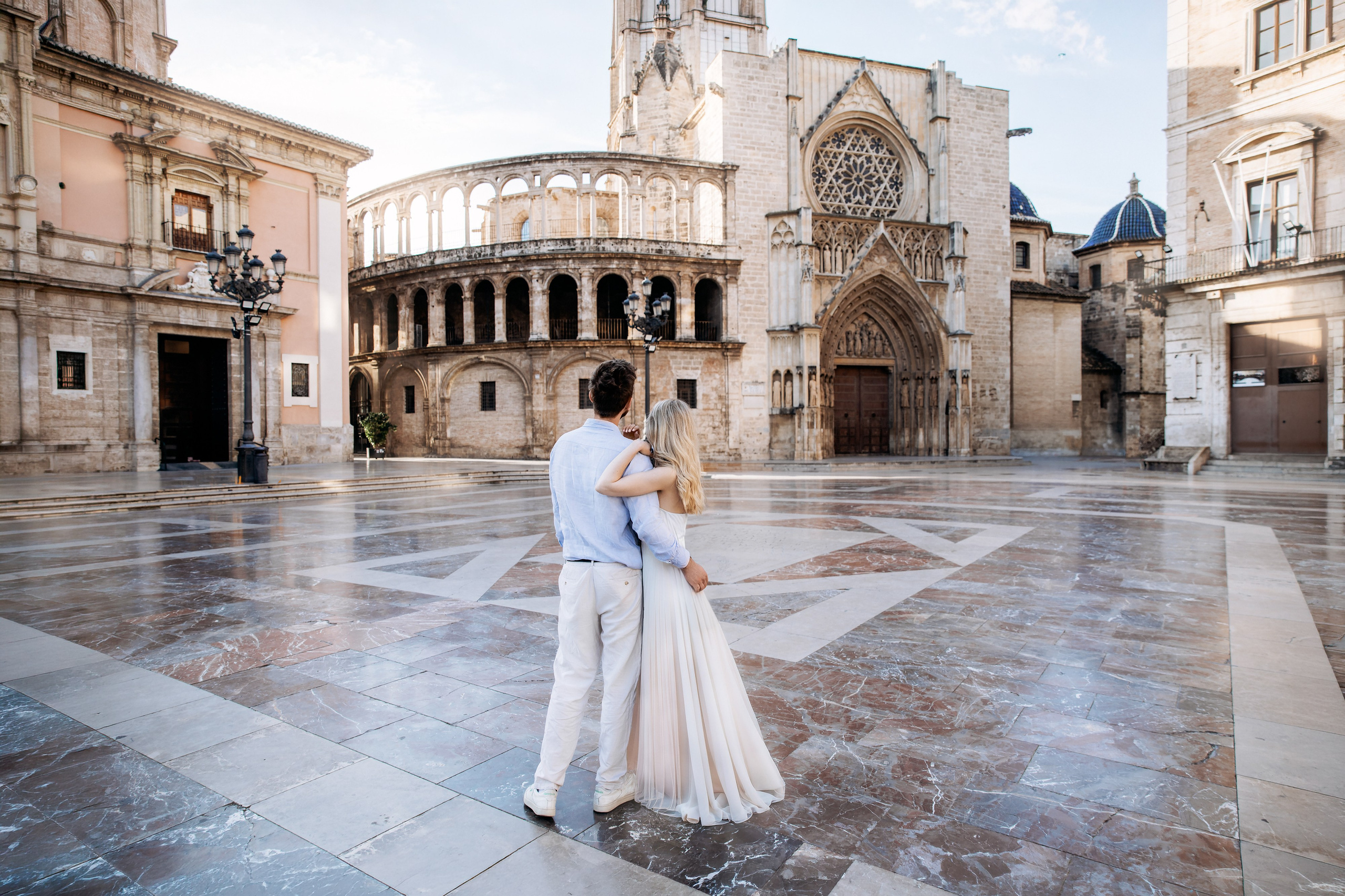
Why Choose Valencia for a Destination Wedding
Perfect Mix of City, Beach, and Nature
Valencia is highly accessible, as it offers city, beach, and nature within 15 minutes of each other. El Carmen offers a myriad of Gothic plazas to explore, like an open-air museum. If you are looking for breathtaking pools and a touch of futurism, look no further than the City of Arts and Sciences. When in need of a cool sea breeze and natural scenery, El Saler brings protected dunes and pine forests. With such scenic beauty and range, these locations will give your photos an element of surprise and variety to last a lifetime.
More Affordable Than Barcelona or Mallorca
Valencia offers so much for only 30 to 40 percent less. Venues are perfectly designed to create an atmosphere of intimacy, which means they may be smaller but still provide more value than most. This does not come at the expense of quality, no. It simply means you are skipping the tourist price tag seen in better-known destinations.
Ideal for Intimate and Elegant Weddings
Valencia venues suit 20 to 60 guests and feel best with smaller groups. Whether it is for a beach wedding or an intimate dinner, the city can cater to both. It is also easily accessible via direct flights from the majority of Europe and via the fast train connections from Madrid.
Best Wedding Venues in Valencia
Valencia’s venues all look beautiful in photos, but each needs the right timing and approach to get the best results.
Beach Wedding Venues
Las Arenas Balneario Resort: Situated on the sand where Valencia meets the Mediterranean, this hotel has a colonial feel to the space that is second to none. This venue can host mid-sized weddings for 60 to 100 people and features both the wedding ceremony and reception in one location. The in-house caterers can prepare and serve the guests. The venue tends to photograph exceptionally well. The lighting in the area softens after 5:00 p.m. when the sun begins to set over the city and filters through the magnificent architecture of the building. The alternative, shooting the ceremony in the mornings exposes the wedding to the harsh light of the sun and the coastal winds. To avoid these problems, the best time to wed at this location is at 6:00 p.m. or later.
Luxury Villas and Fincas
Mas de Alzedo in Riba-roja del Turia: An eighteenth-century estate with stone walls, patios, and shaded gardens perfect for hosting up to 300 guests or smaller weddings that require more space. The estate features a covered patio that offers the best option for dealing with rain that I have seen in Valencia. Should the weather turn bad, there is no loss of the atmosphere or lighting of the venue. The open patio faces southwest, catching golden hour from 7:30 p.m. to 8:45 p.m. in late spring. The gardens' dappled light falls beautifully through the trees, but only after 4 p.m. when the sun lowers. Morning ceremonies here fall flat photographically. Crowds are never an issue as the estate is fully private.
Mas Les Lloses in Sagunto: This twentieth-century estate is a wonder, surrounded by orange trees at the edge of Monte Picaio. For couples wanting a natural aesthetic and open views, this renovated venue was once a warehouse and has now transformed into a perfectly suitable location for indoor banquets for up to 250 guests. There is also an outdoor space for larger celebrations. No wedding is complete without the perfect set of photographs. To make that possible, the orange groves are both a gift and a challenge as orange blossoms in March and April add striking beauty but also attract bees. By May, they offer shade that makes portraits a thing of beauty. The views westward are a sight to behold, as they deliver breathtaking sunset backdrops. Indoors, the artificial lighting is excellent for the evening reception, especially since the windows are small. Plan if your wedding will be during the day, as indoor ceremonies need supplemental light.
City & Architectural Locations
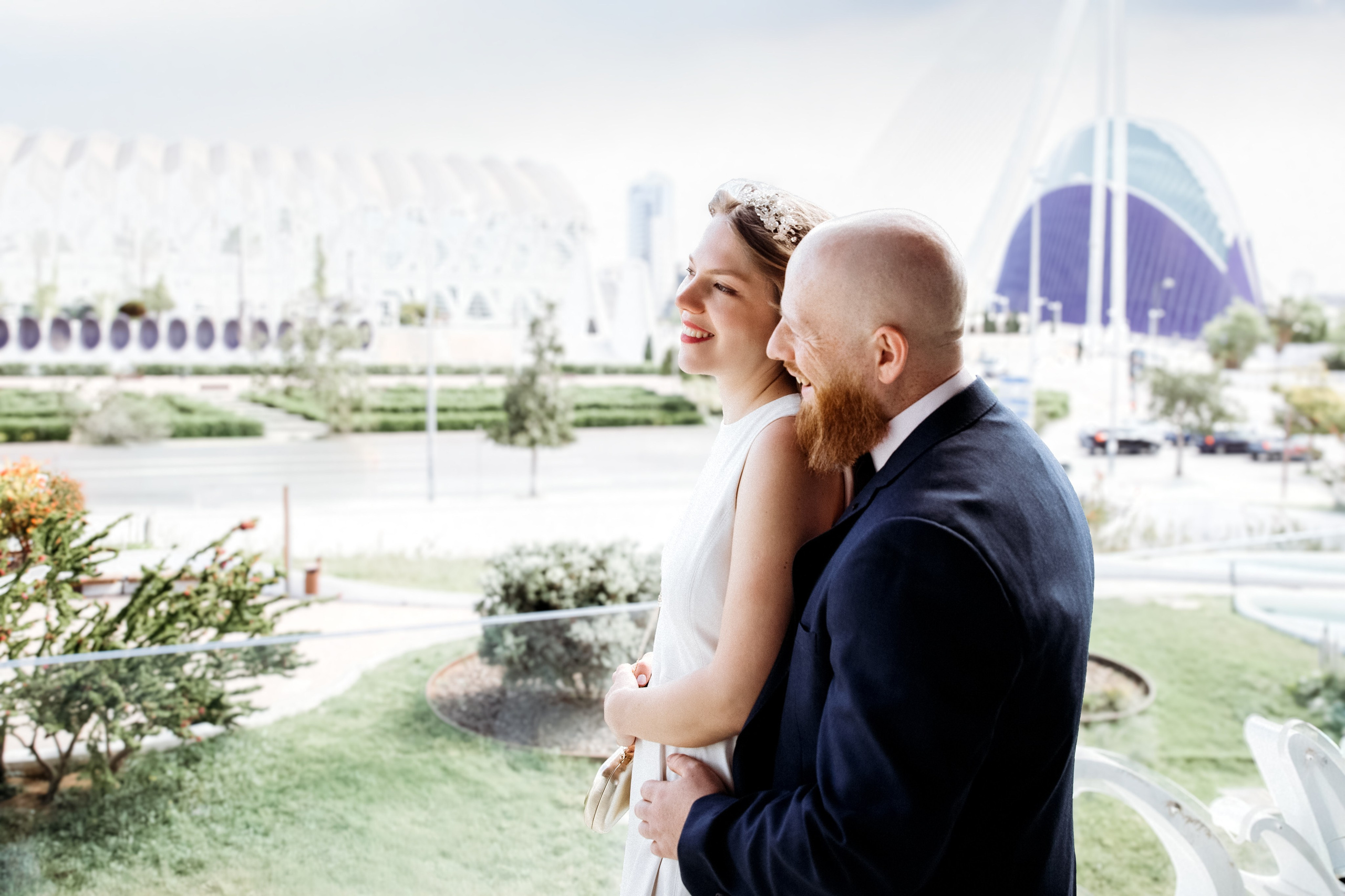
City of Arts and Sciences: Santiago Calatrava’s architecture is best for a modern wedding as it has white, futuristic architecture. This location demands precise timing in your wedding photography plan. From 10 a.m. to 4 p.m., the structures are overcrowded with tourists. This makes a clean background impossible to achieve. Ideally, sunrise can give you empty plazas and soft directional light. However, more realistically, sunset is the perfect time to get the perfect shot as the sun’s rays offer golden reflections in the pools, which will elevate your photographs to another level. Overcast days or golden hour are essential as the light will be just right. Permits are required for formal ceremonies, but portrait sessions move freely with minimal restriction.
La Cartuja de Ara Christi in El Puig: This was once a Carthusian monastery. Thirty minutes from the city, this location boasts spectacular Gothic arches and courtyards that have seen centuries pass by. It’s not for small weddings. Think over 200 guests. Moreover, if you are interested in some history, this venue has plenty. The east-facing cloisters are blessed with gorgeous light in the morning. The indoor chapel saves the day if it rains. The sound system will require microphones for the speakers due to the echo in the ancient monastery. Allow 30 minutes to travel from Valencia to this location, though; the drive is fine, but should be accounted for during your travel plans.
El Telar de Miguel Martí in Valencia City: This venue was once a textile factory in the twelfth century. Today, it’s an urban wedding venue with an industrial twist, but mostly polished up nicely. The venue can accommodate around 120 to 150 guests. This is best for couples looking for something stylish, a little moody, and decidedly urban for their special day. It’s not for everyone, but if it’s your desired wedding venue vibe, you’ll love it. The north-facing windows provide good light for portraits between 10:00 a.m. and 4:00 p.m., which is different from most wedding venues in Valencia. After sunset, the interior of the venue will be dim, so professional lighting will be needed for wedding receptions after dark. For couple portraits, the nearby El Cabanyal provides colorful backdrops for wedding photos and portraits. The location is quieter on weekdays but sees more people on weekends.
Best Time of Year for a Wedding in Valencia
Spring
Temperatures range from 18 to 24 degrees Celsius, with orange blossoms in the air and light rain falling. However, by mid-March, the light improves from 7:30 p.m. until 9:00 p.m. by May. Therefore, 5:30 p.m. will be ideal for portraits during golden hour.
Summer
Some months work better than others. June is one of the best months to host your wedding ceremony, while July and August can be hot months that can pose challenges for the guests in terms of the heat. The light remains strong well into the evening, until around 9:00 p.m. in some instances. However, wedding ceremonies between 1:00 p.m. and 6:00 p.m. are best avoided as the sun is at its hottest. There is some relief around 7:00 p.m. when the heat begins to ease, and the beach venues have a sea breeze to offer the guests. Additionally, the sun sets nearly two hours after dinner, providing guests with some of the best photographs of their wedding celebration.
Autumn
September is just as good as May. The warm seas are perfect, there are fewer crowds to contend with, and the golden light falls across the region from around 7:00 to 8:00 p.m. October brings cooler temperatures and showers of rain, but also some of the quieter spots in town with more competitive rates for accommodation. November brings a stillness to the region with a soft light falling across the area during the day.
Winter
The season for elopements and ceremonies is winter, with its milder temperatures of 15 to 18 degrees Celsius. The best time of day for lighting is between 12:00 and 2:00 p.m. when the City of Arts and Sciences displays its quiet beauty in the winter overcast, or perhaps in one of the sheltered spots on the beach that are not constantly exposed to the wind. Valencia is best utilized in the sunset time of the day rather than in the morning. The exception to this rule is the sunrise at the City of Arts and Sciences, when it is empty, and the best spots for portraits of the couple.
How to Plan a Destination Wedding in Valencia
Step 1: Choose Your Wedding Style
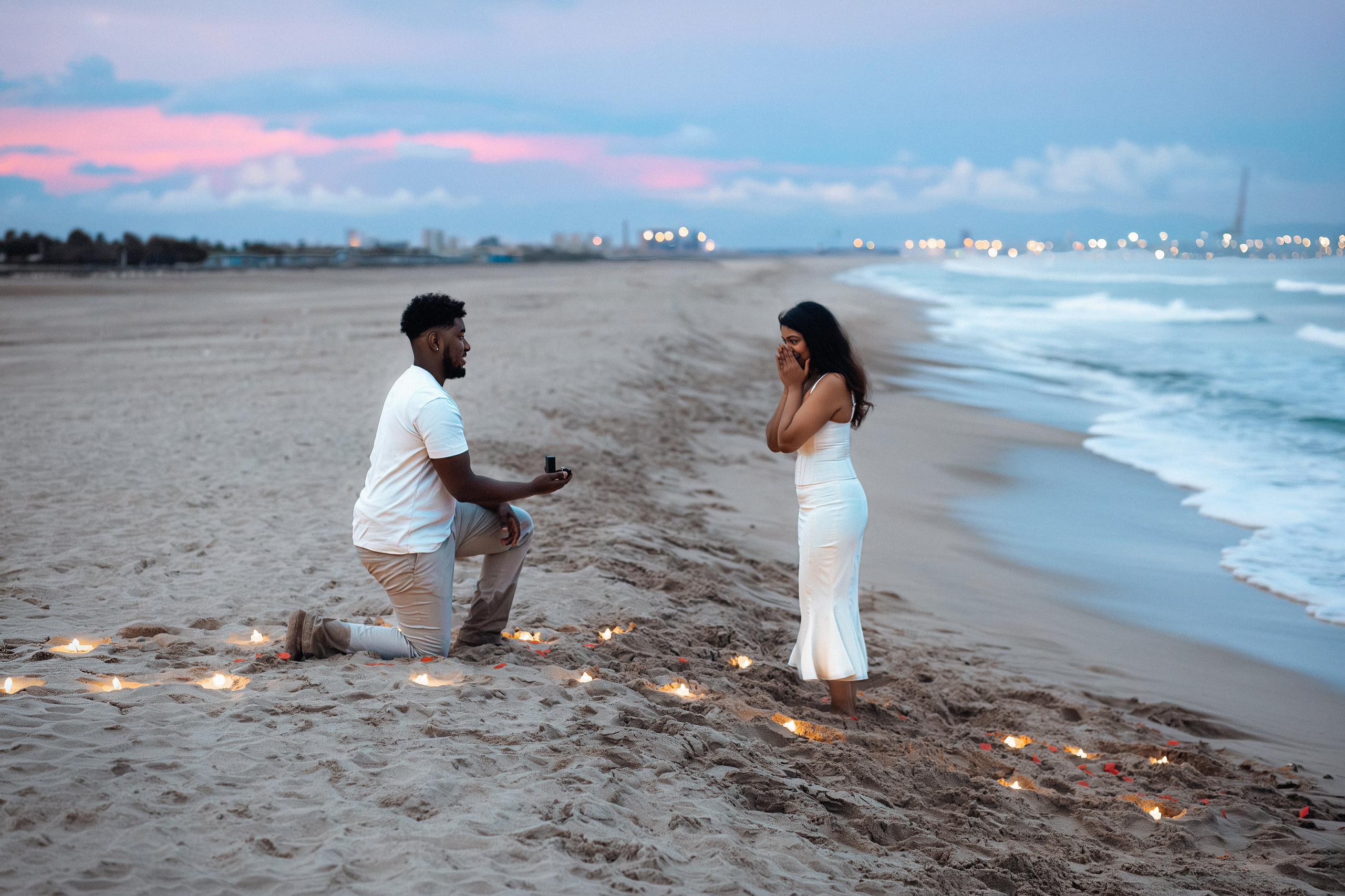
Decide this first–it will dictate your choice of venue and vendors. Since elopements typically have two to ten guests, you can select public venues such as El Saler beach or the City of Arts and Sciences for your wedding. You can move between three locations in two hours. Full weddings, twenty or more guests, require private venues, seated catering, and structured logistics.
Step 2: Pick the Right Venue
It goes without saying that picking the right venue for your guest count is the first step to a successful wedding. A finca meant for 200 guests may feel hollow with only 20 people, whereas an intimate courtyard designed for 40 will feel overcrowded with 100. To get a proper feel of your venue, visit in person before the wedding, where possible, or request a video walkthrough. Asking relevant questions, such as where the sun hits at 7:00 p.m., is one of the most crucial photography planning questions. Also, you should find out where guests go if it rains or how long it takes to drive from the city center. Book twelve to eighteen months ahead for spring and autumn dates. Summer fills faster. Winter offers more flexibility but fewer venue options overall.
Step 3: Hire Local Vendors
This is where destination weddings succeed or fail. Local knowledge shapes everything, from the exact “golden light” hours to which forms of architecture glow at sunset, as well as when orange blossoms quietly return to the air. Local photographers will know exactly how to work around these factors. Language is usually not a major issue since most vendors are used to international couples. However, a bilingual planner keeps every detail aligned, from timing to quantities to expectations, so nothing is lost in translation.
Step 4: Plan Travel and Accommodation
Valencia Airport has direct flights from London, Paris, Berlin, Amsterdam, Rome, and connections from the United States via Madrid or Barcelona. High-speed trains from Madrid take 90 minutes. Guest accommodation is also critical, and the most recommended course of action is for guests to stay near the wedding venue, near central neighborhoods like El Carmen, Ruzafa, or Eixample. Providing clear transport instructions, including recommended taxi apps, airport transfer options, and local emergency numbers, is one of the most important things you can do for your guests. To make the wedding day even smoother, consider arranging shuttle services so that they do not have to navigate public transport in formal wedding attire. This level of thoughtfulness will ensure that your destination wedding is a dream instead of a nightmare.
Step 5: Create a Timeline
Work backward from sunset. For a spring wedding with sunset at 8:30 p.m., the ceremony must be at 5:30 p.m., cocktails at 6:30 p.m., portraits at 7:15 p.m., and dinner at 8:00 p.m. Plan 30% more buffer time for travel than you would for a local wedding. A local wedding planner is not necessary for elopements, but may be helpful for planning a wedding of 30 or more guests. Self-planning is an option for elopements if you have researched the city where the wedding will take place and have an understanding of the photographer’s schedule.
How Much Does a Wedding in Valencia Cost?
Based on current market data from established wedding planners and venues in Valencia, here are the estimated costs for weddings in 2026. Venue costs will vary depending on the property selected. Historic fincas that allow couples to have the weekend of their dreams will be at the higher end of the price range for wedding venues. Then there are beach clubs that allow couples to share the beach for their big day. These will be in the moderate price range for wedding venues. Early summer weddings will cost more than winter weddings in Valencia. Catering costs start at around €114 per person. This will vary depending on the menu options that are selected for the wedding, the time of year that the wedding is held, and whether wine and an open bar are ordered for the wedding. Three-course menus with wine are available at a mid-range price for wedding catering. For more sophisticated, curated menus, the price will be higher. Hotels and boutique hotels will start at around €120 per head for wedding catering. Luxury properties will be around €250 per head. So, if you are planning your wedding in 2026, this will give you an idea of the costs involved so that your wedding experience is worth it in the end.
Example Budgets
Small wedding (10 to 20 guests): Let’s do some quick math here. Assuming €114 per person for twenty guests brings the food and service to €2,300. Then you factor in the other costs — venue, photography, flowers, decor (if you have the budget for anything besides the catering, that is). Where does that leave you? In the low to mid five figures in most cases. Again, in euros, not dollars. Just something to keep in mind when you are budgeting for your wedding reception.
Mid-size wedding (30 to 60 guests): Wedding catering starts around €3,400 to €6,800 on average. The cost of wedding venues starts at a low figure but increases with the number of wedding guests and the type of venue. The cost of wedding photography, wedding florals, wedding decor, and planning support brings the total cost to somewhere in the mid-five figures.
Luxury wedding for 80 to 150 guests: Catering will cost between €9,000 and €17,000 at the standard rates. Now go bigger. Add an exclusive venue. Add extended coverage for wedding photography. Add flowers and lighting for the venue. Add a wedding planner. For a luxury wedding, you’ll be looking at six figures to accommodate all of this. These estimates are for hiring professionals who can do it all — wedding planners, photographers, caterers, and decorators. Valencia will give you more for your money than Barcelona or Mallorca. No question. However, here is the thing — quality costs money.
Legal Requirements for Getting Married in Valencia
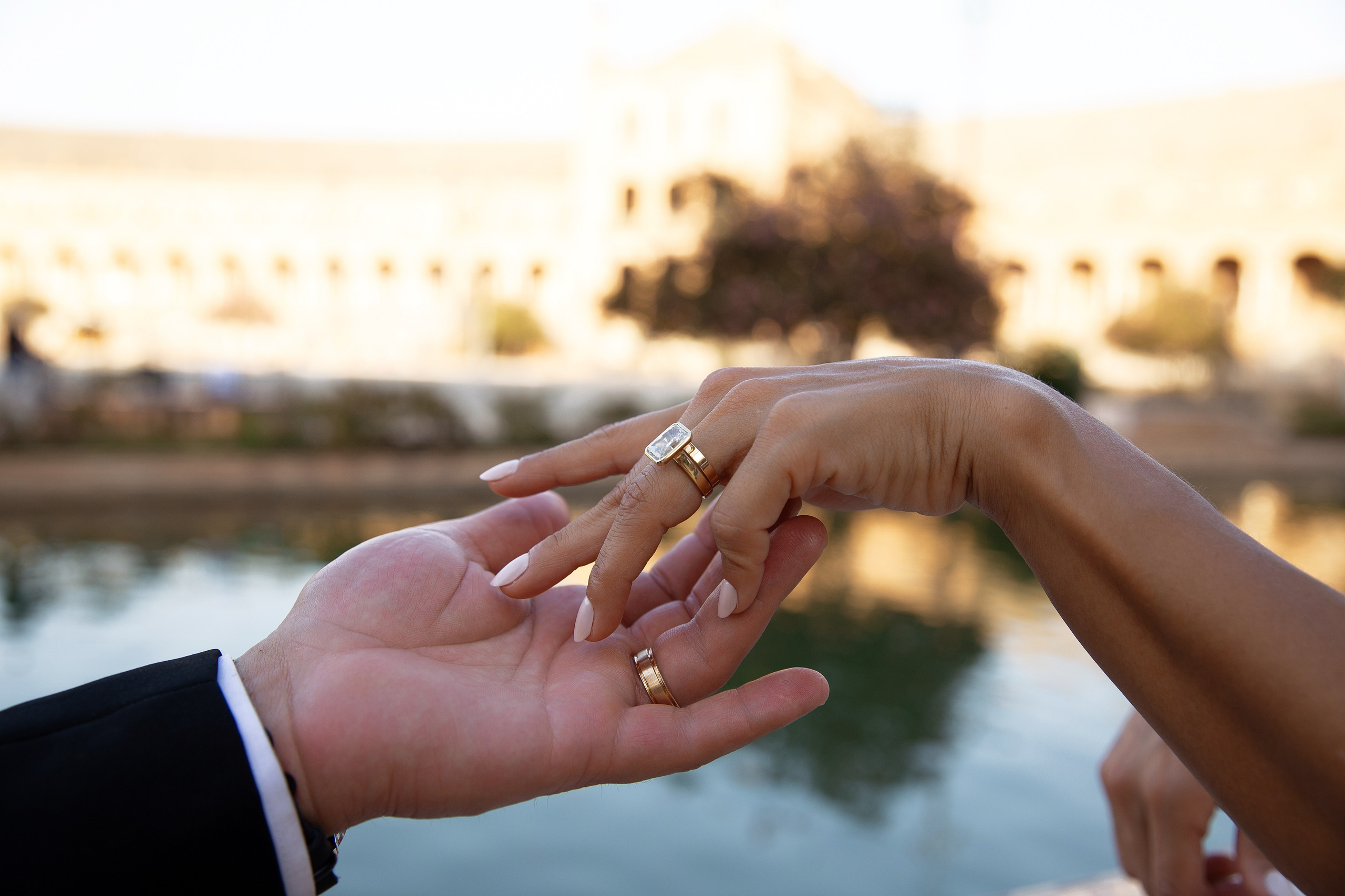
Civil ceremonies are legal but involve a lot of paperwork and processing time, which most foreign couples find difficult. A symbolic ceremony is not legally binding. You can sort out the legalities at home and then come to Valencia to celebrate. Same vows, same rings, same meaning — just no bureaucracy involved. This is how most couples choose to celebrate and why!
Real Tips from a Wedding Photographer in Valencia
Best light conditions
You want to know the best time for photographs? Golden hour. It starts about 90 minutes before the sun goes down and lasts 20 minutes after. In May, that means shooting between 7:00 and 9:00 p.m. September is different. So, the light shows up earlier, around 6:30 to 8:00 p.m. Moreover, it is a warm, directional, and beautiful light. It softens everything around the edges and makes skin look good without trying too hard. If you time your ceremony to end right when that window starts, then portraits happen naturally while your guests do the cocktail hour. One thing to remember, however. Midday light is not your friend. Especially between 1:00 and 5:00 p.m. It is harsh and unforgiving; it is best to avoid it if you can. Avoid outdoor portraits at this time, as the light is overhead, reducing the likelihood of the perfect photograph.
Why 2 hours is often better than 1
One hour of photography forces you into rushed decisions and stressed expressions. You only get one location for your shoot and minimal variety in your shoot. Two hours allows us to walk to better lighting, find a way to avoid the crowds in the background, and ultimately get you looking and enjoying the process of being photographed. There is a noticeable difference in the final products — there are more natural expressions, locations, and variety in the lighting of the shoot.
Combining locations
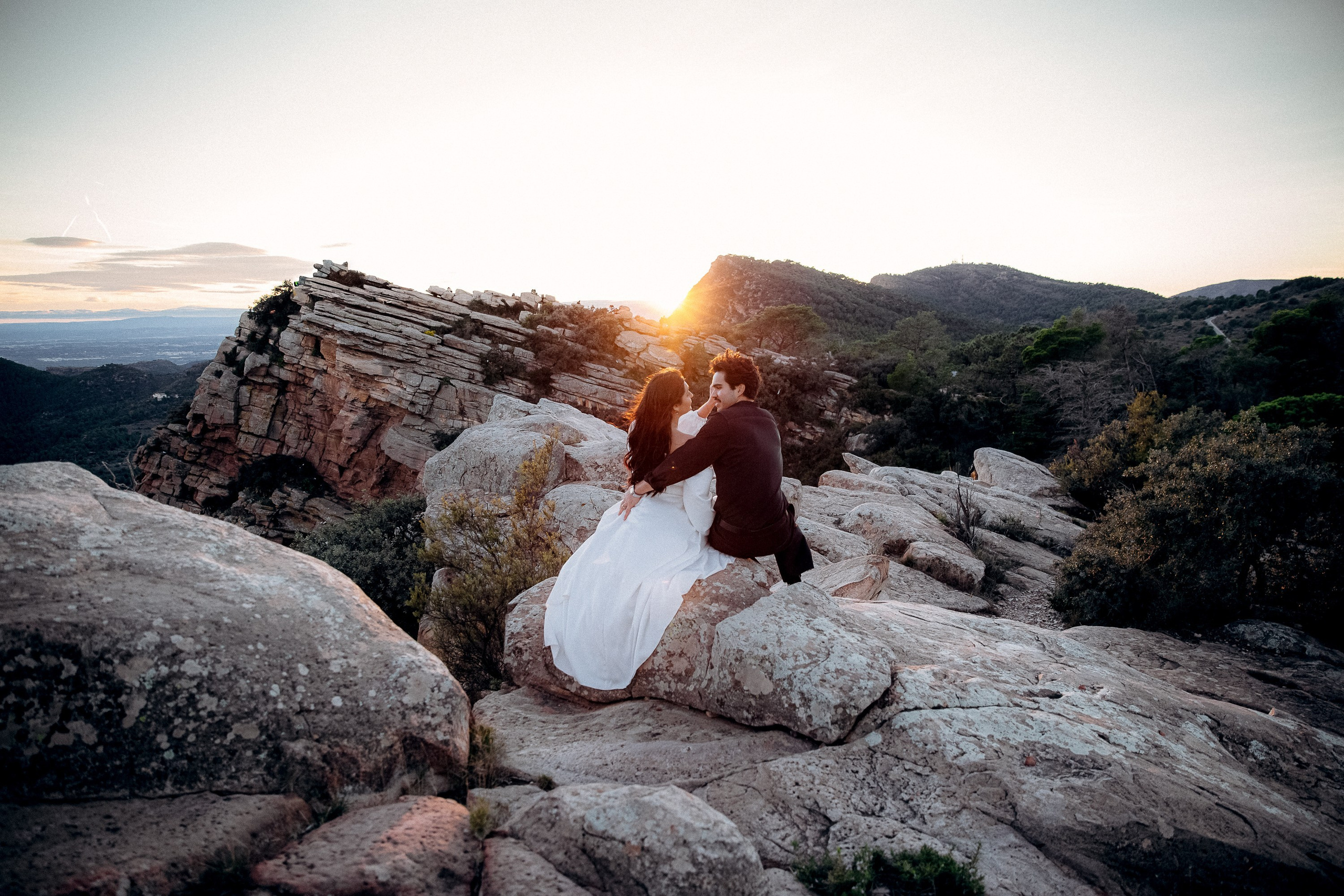
Valencia is known for its mix of architecture and natural beauty. Start at the City of Arts and Sciences at 6:30 p.m. for some modern, futuristic portraits. Continue for ten minutes to El Cabanyal for a more colorful, Mediterranean texture. End at El Saler beach by 7:45 p.m. to capture the golden hour and sunset. This will give you three looks within a 90-minute time span. It does require smooth transport planning and a buffer for traffic, but the variety you get in your final gallery makes the coordination worthwhile.
Avoiding crowds
By 10:00 a.m., the streets are abuzz with visitors. Therefore, to avoid crowds and capture clean shots, make sure to wake early when the light is soft and the cobblestones still hold the morning stillness. As the day progresses, many places fill up, leaving hidden courtyards as the best places to capture the perfect shots.
Destination Wedding Timeline
12 months before
Set your date, research, and book a venue. Book your photographer; quality photographers fill nine to twelve months out. Send “save the dates” for destination guests.
6 months before
Confirm venue contract. Book a caterer, florist, and officiant. Reserve hotel rooms. Begin gathering legal paperwork only if pursuing a civil ceremony.
3 months before
Send out formal invitations while everything is still taking shape and begin locking in the timeline with your vendors so nothing is left open-ended. This is also when rings and attire should be fully ordered, and the rehearsal dinner location gently settled into place.
One week before
Travel to Valencia and step into the space itself. Walk through the venue in person, hold your final call with the photographer to refine timing and light, confirm all transport details, and then allow yourself a little stillness to rest before everything begins.
FAQ Section
Is Valencia good for a destination wedding?
Yes. It offers accessible beaches, striking architecture, mild weather, and costs 30 to 40 percent less than Barcelona or Mallorca. It excels for intimate weddings of ten to sixty guests.
How much does a wedding in Valencia cost?
Catering alone can be from €70 to €170 per head. Smaller gatherings of ten to twenty guests will fall between the low to mid five-figure range. On the opposite side of the scale, large weddings, with 80 or more guests, can reach figures of about €10,000 alone for catering.
Can foreigners get married in Valencia?
Yes, they can, but take into account that to be legal, civil ceremonies require a huge volume of paperwork. For that reason, many couples opt for symbolic ceremonies in Valencia.
What is the best month to get married in Valencia?
May, June, September, and October offer ideal conditions. Temperatures are comfortable, light is beautiful, and crowds are manageable.
Do I need a wedding planner in Valencia?
For elopements with fewer than ten guests, a planner is usually not necessary. For weddings of twenty guests or more, especially without Spanish, a local planner becomes highly recommended to keep everything running smoothly.
How far in advance should I book vendors?
The photographer and event venues typically take 9 to 12 months to secure. The caterer and floral designer may be able to accommodate booking appointments 6 months in advance. However, for the peak season dates, it is better to plan 12 to 18 months ahead to secure the catering and event location of choice.
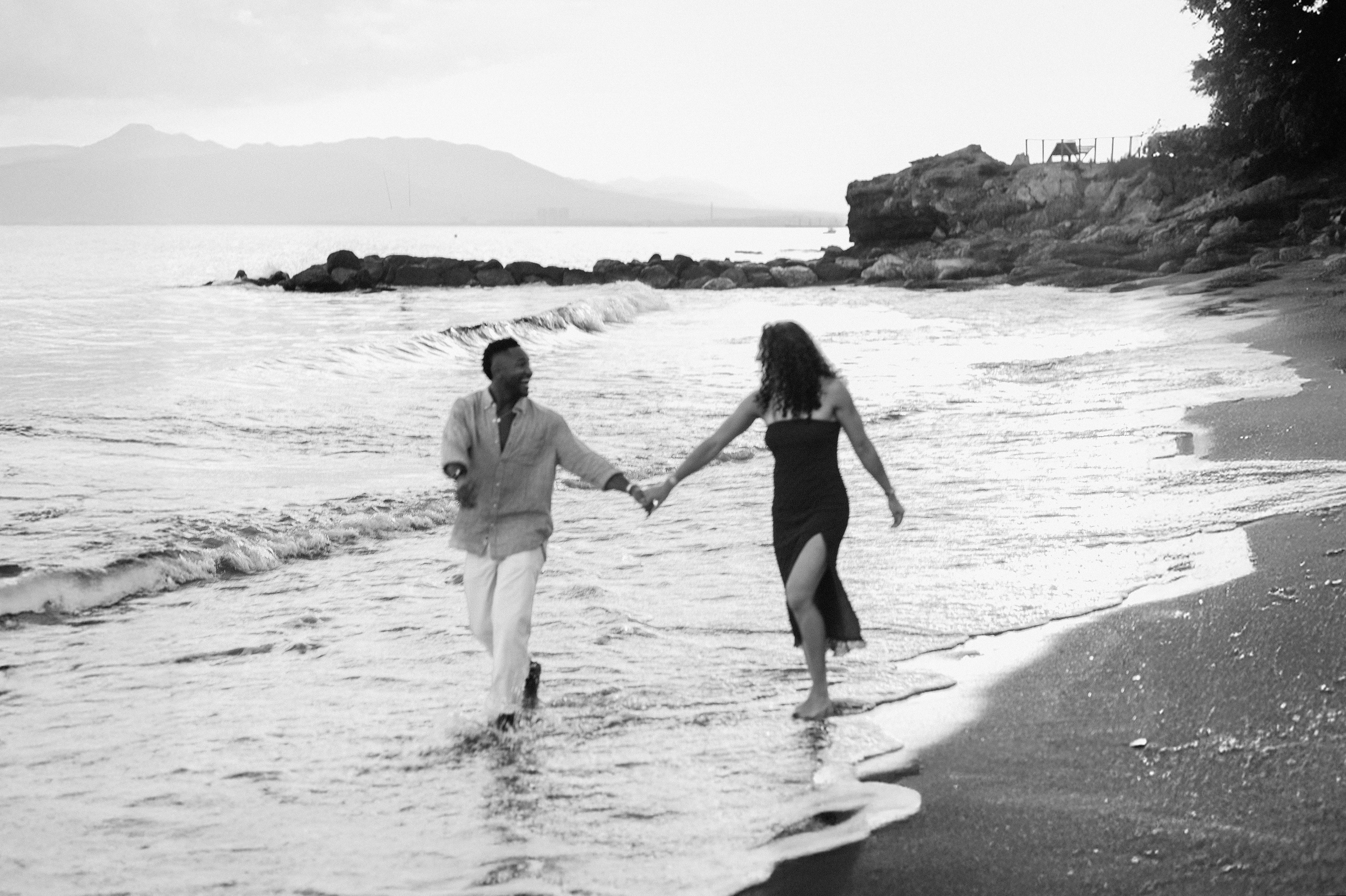
Valencia has something rare for destination weddings. Not only are there venues that offer the beauty that you want for your big day, but the costs are relatively reasonable. With Valencia, you can avoid crowds and extreme budgets for your wedding. Instead, enjoy a destination wedding in the town that is perfect for the couple and their vision for the wedding. A destination wedding in Valencia is not just about your special day but also about experiencing the beauty of this city. Timeless and beautifully captured photographs can capture this beauty forever.
If Valencia feels like the right place for your wedding, I’d love to hear what you’re planning. Whether you already have a date or you’re just exploring ideas, feel free to reach out. I’m always happy to help and guide you. And if it feels like the right fit, I’ll be there to capture your day in a natural, timeless way you’ll come back to for years.

Destination Wedding in Alicante & Costa Blanca: Hidden Gems for Couples
